SUMMONER'S CIRCLE DEBUT NEW SINGLE "PIOUS" ON THE ZACH MOONSHINE SHOW, NINJAWITCH RECOUNTS DELTA DOOM FEST AND THE TOUR FROM HELL
Herb Himes and John Wesley Springer discuss Summoner's Circle's upcoming single featuring Haley Grow of Arsenic...
More
SUMMONER'S CIRCLE DEBUT NEW SINGLE "PIOUS" ON THE ZACH MOONSHINE SHOW, NINJAWITCH RECOUNTS DELTA DOOM FEST AND THE TOUR FROM HELL
Herb Himes and John Wesley Springer discuss Summoner's Circle's upcoming single featuring Haley Grow of Arsenic Addiction, their Bandcamp-exclusive live release, NinjaWitch's latest shows, and the van breakdown that nearly stranded the band in Idaho.
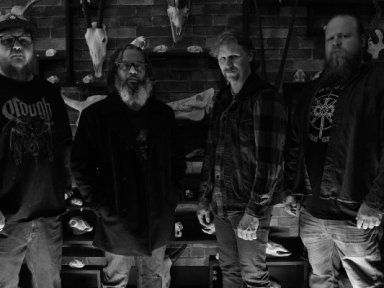
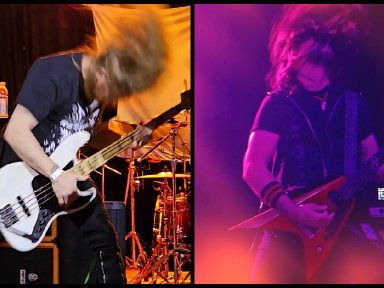
The underground got a double dose of heavy metal when Herb Himes and John Wesley Springer of NinjaWitch and Summoner's Circle joined Zach Moonshine on The Zach Moonshine Show on Metal Devastation Radio. Fresh off NinjaWitch's appearance at Delta Doom Fest in Memphis, Tennessee, the musicians brought stories from the festival, updates from both bands, and an unexpected tale of mechanical disaster from Summoner's Circle's recent tour.
The biggest news of the night came when Summoner's Circle unveiled details about its upcoming single, "Pious," scheduled for release October 30, 2026. The track features guest vocals from Haley Grow, also known as Lady Arsenic of Arsenic Addiction, and represents a significant moment in the band's evolution.
The conversation also covered the band's new live EP, The Shape of Darkness Live, NinjaWitch's upcoming performances, and the realities of life on the road when your tour vehicle decides it has had enough.
SUMMONER'S CIRCLE PREPARES TO RELEASE "PIOUS" FEATURING HALEY GROW
Summoner's Circle is preparing to release "Pious," a new single featuring guest vocals from Haley Grow of Arsenic Addiction. During the interview, the band explained that the song represents the final recording featuring former keyboardist Nadir, who contributed arrangements and orchestration before moving on to other projects.
The track also introduces a new collaborative element through Grow's contributions, which include clean vocals and growls.
"We're really excited," the band explained, describing the song as a fitting close to an era while looking ahead to what comes next.
The collaboration developed after Summoner's Circle and Arsenic Addiction performed at Tennessee Metal Devastation Music Fest. The musicians connected over their respective performances and eventually discussed the possibility of working together.
"We were fanboying and grilling each other's bands," the band recalled, describing how their mutual appreciation led to the collaboration.
The result is a new single that brings another voice into Summoner's Circle's dark and theatrical musical world.
"Pious" is scheduled to arrive Friday, October 30, 2026, and will be available through Bandcamp and major streaming platforms.
THE SHAPE OF DARKNESS LIVE: KEEPING IT RAW AND KEEPING IT EXCLUSIVE
Summoner's Circle recently released The Shape of Darkness Live, a three-track live EP assembled from recordings captured during the band's 2025 Shape of Darkness Tour.
The release features:
"Apostle's Dogma/Cult of the Dead Sun"
"Chaos Vector"
"Apostasy"
Rather than presenting a heavily polished reconstruction of the band's stage performance, the group wanted to preserve the feeling of being in the room with them.
"It's a really accurate live representation of what you're going to get into at a Summoner's Circle show," the band explained. "It feels live. It is live."
The performances were selected from recordings made at multiple stops along the tour. Jacob Daniel Potter handled the mixing and mastering, helping bring the recordings together while retaining their live character.
The band toured alongside Illusion of Fate, describing the experience as a particularly enjoyable run filled with memorable moments. One story involved the band's friends and tourmates, whose drummer Austin apparently ended up wearing a banana suit after the Summoner's Circle crew stole his clothes at Planet Fitness.
As the conversation made clear, not every tour memory involves broken equipment and logistical nightmares.
The band has also made a deliberate decision to keep The Shape of Darkness Live exclusive to Bandcamp for now.
Rather than immediately putting the EP on every major streaming platform, Summoner's Circle sees the release as an opportunity to offer something special to dedicated fans while exploring a more direct way of connecting with listeners.
The band also plans to continue recording performances on the road, potentially releasing additional live singles through Bandcamp in the future.
Listen to The Shape of Darkness Live on Bandcamp:
https://summonerscircle.bandcamp.com/album/the-shape-of-darkness-live
THE TOUR FROM HELL: SUMMONER'S CIRCLE STRANDED IN IDAHO
Every touring band has stories about bad hotels, questionable venues, and equipment failures. Summoner's Circle returned from its recent tour with a story that took things considerably further.
During the interview, the band described how its van suffered a catastrophic engine failure while traveling through the mountains between Wyoming and Idaho, leaving the musicians stranded in a remote area without cell service.
John Wesley Springer recalled beginning the morning in good spirits after waking at a scenic rest area and watching the sunrise. The band had been traveling through the mountains toward a show in Idaho Falls when the vehicle finally gave out.
The van had made an unusual noise the night before, but the group had checked it over and had little reason to believe it was about to leave them stranded.
Then, while climbing a mountain road, the engine stopped.
The situation was particularly dangerous because the vehicle had come to rest on a narrow stretch of road with limited shoulder space and a steep drop nearby. With no cell service, the musicians had few immediate options.
Fortunately, a passing Good Samaritan stopped and helped the band get assistance. That kindness helped the group get off the mountain and make it to the scheduled Idaho Falls performance.
Despite the mechanical disaster, the show itself went well. The band praised the venue and sound engineer, and the venue even allowed them to store their equipment safely while they worked out what to do next.
Unfortunately, the problems didn't end there.
The musicians explored their options for continuing the tour, including renting a vehicle and finding a way to transport their equipment. But there were no suitable rental cars available within a 200-mile radius.
The band eventually faced a difficult financial decision: spend more money trying to continue the tour or head home.
Their aging van, purchased in 2019, was left behind in Idaho Falls.
As the conversation turned toward the absurdity of the situation, Zach and the musicians joked about the possibility of someone buying the abandoned vehicle as a piece of touring history.
It was a brutal reminder that life on the road can change in an instant, even when a band has done its homework.
As the band explained, routing becomes increasingly important when you're traveling with a heavy vehicle and equipment through unfamiliar mountain passes. Sometimes, the only way to learn which roads to avoid is to experience them firsthand.
And sometimes, you don't just break a string or blow an amp.
Sometimes, you break the whole damn van.
NINJAWITCH RETURNS FROM DELTA DOOM FEST
The conversation also turned to NinjaWitch's recent performance at Delta Doom Fest at Growlers in Memphis, Tennessee.
Zach Moonshine, who attended the festival, praised the event and its lineup, highlighting the atmosphere and the strong performances throughout the day.
The band shared that the festival was a positive experience, giving credit to organizers James, Kenzie, Myk, and everyone involved in putting the event together.
For a first-year festival, the musicians felt the event was exceptionally well organized, with the bands treated well and the day running smoothly.
They also discussed the appeal of Growlers as a venue, with its intimate atmosphere and close connection between performers and audience members.
The festival brought together bands from across the underground doom and heavy music scenes, creating the kind of environment where musicians can catch up, discover new acts, and build relationships that extend beyond a single performance.
NinjaWitch is keeping that momentum going with additional appearances on the calendar.
The band discussed its upcoming performance at When to Go Doom Fest in Knoxville on October 31, followed by a headlining appearance on the first night of Stone Griff Revival in Gastonia, North Carolina, on November 6.
The musicians also mentioned that a future Knoxville show featuring both NinjaWitch and Summoner's Circle was being planned, although details had not yet been officially announced at the time of the interview.
TWO BANDS, TWO DIFFERENT APPROACHES TO HEAVY MUSIC
Although Herb Himes and John Wesley Springer perform in both NinjaWitch and Summoner's Circle, the musicians explained that the projects offer very different creative experiences.
Summoner's Circle takes a more precise and structured approach, while NinjaWitch gives the musicians greater freedom to experiment and improvise.
Himes described NinjaWitch as an opportunity to explore another side of his playing, letting the music develop naturally in the moment rather than following the more exacting approach required by Summoner's Circle.
Springer echoed that sentiment, describing NinjaWitch as a positive creative outlet that allows him to explore a different musical atmosphere.
The differences extend to their equipment and performance setups.
Springer explained that he uses a more stripped-down pedalboard with Summoner's Circle, while NinjaWitch calls for a much more expansive collection of effects. He also contributes synthesizers and keyboards to NinjaWitch, adding another dimension to the band's psychedelic sound.
Himes uses the same guitar and basic setup across both projects but changes his amplifier settings to suit their different musical personalities.
With NinjaWitch, he leans toward fuzz and an old-school, cranked Marshall-style sound. Summoner's Circle calls for a more modern tonal approach.
For musicians who want to see both sides of their playing, the possibility of catching the two bands on the same bill offers a particularly interesting opportunity.
The musicians explained that sharing a stage with both projects allows audiences to experience two very different approaches to heavy music, even with some of the same players involved.
WHAT'S NEXT FOR NINJAWITCH AND SUMMONER'S CIRCLE?
With "Pious" arriving October 30, a new live EP available through Bandcamp, and NinjaWitch continuing to book performances, both projects have plenty happening.
Summoner's Circle is looking toward its next chapter following the departure of keyboardist Nadir, while the collaboration with Haley Grow points toward new possibilities for the band's future recordings.
NinjaWitch continues to develop its psychedelic doom sound through songwriting, experimentation, and live performances.
The musicians also hinted at a future Knoxville show featuring both bands, encouraging fans to keep an eye on their official social media pages for announcements.
For independent musicians, the road can be unpredictable, the equipment can fail, and the best-laid plans can fall apart somewhere between mountain passes. But the conversation made one thing clear: the drive to keep playing, creating, and connecting with audiences remains stronger than ever.
From the cosmic riffs of NinjaWitch to the dark theatrical heaviness of Summoner's Circle, Herb Himes and John Wesley Springer continue to keep the underground moving.
And if there's one lesson to take from their latest tour, it's this: check your vehicle, plan your route, and maybe keep a U-Haul rental number handy.
LISTEN AND FOLLOW
SUMMONER'S CIRCLEThe Shape of Darkness Live is available exclusively on Bandcamp.
https://summonerscircle.bandcamp.com/album/the-shape-of-darkness-live
New single "Pious" featuring Haley Grow of Arsenic Addiction is scheduled for release October 30, 2026.
NINJAWITCHCheck out Frequency of Gods on your favorite streaming platform, and follow the band for upcoming show announcements.
https://ninjawitch.bandcamp.com/album/frequency-of-gods
Metal Devastation Radio. Real bands. Real conversations. No shortage of chaos on the road.
Full Track List:
Battle Of The bands Top Six Winners:
1 - Trivan - CROWNED WITH DREAD AND POWER2 - Voidmaker - Of Digital Creation3 - Soul Of Sheol - Paradise Is Not For Us4 - Rhino Rawkstar - Warning Labels5 - Mistress - Terrified eyes6 - FORSAKEN AGE - War Machine MST
The Zach Moonshine Intro
7 - Type O Negative - Wolf Moon (including Zoanthropic Paranoia)8 - Tony Iommi - Stormwatcher9 - NinjaWitch - Tune Low Get High
NINJAWITCH & SUMMONER'S CIRCLE - Interview featuring a world premiere of Summoner's brand new track Pious, and Apostle's Dogma/Cult of the Dead Sun/Chaos Vector Live!
10 - Ola Englund - Game Over/World Rift11 - Megaton Communion - Echo's in Time12 - Burnt Witch - Bastard/We Hate You - (Electric Wizard Cover)13 - OCEANS OF SLUMBER - Solitude (Candlemass cover)/Alone (Heart cover)14 - The Red Mountain - N.I.B. (Black Sabbath cover)15 - Inter Arma - Scarecrow (Ministry cover)/ Purple Rain (Prince Cover)16 - Alunah - Wicked Game (Chris Isaak cover)17 - Jungle Rot - Apocalyptic Dawn18 - SPILLAGE - TRUE19 - Morrigan's Echoes feat. The Pirate and Rainbow ( Curse Of Cain ) - You can't hide20 - Juniper Kills - Swollen With Pride21 - EVIL SINNER - WITCH KILLER
Full show streaming now on Mixcloud:
Check out the interview segment on YouTube, Spotify. Apple etc:
[jrEmbed module="jrYouTube" youtube_id="chlto_Ksx2I"]
Super huge shout out to the 152,008 metal maniacs from all over the world that tuned in to the live broadcast Friday night!
Less