Description
Should you choose femur lengthening or tibia lengthening for height increase?
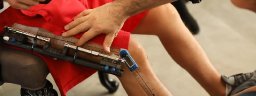
In this video, we compare two real patient journeys. One patient chose femur lengthening targeting a larger gain of 6–7 cm, while the other selected tibia lengthening aiming for 5–6 cm with the goal of maintaining better mobility and independence during recovery.
🦴 Patient 1: Femur Lengthening
📏 Target Gain: 6–7 cm
Why this choice?
✅ Larger potential height gain
✅ Better suited for his goals
✅ Willing to accept a more demanding recovery
Challenges:
⚠️ More muscle stretching
⚠️ Greater focus on knee flexibility
⚠️ Increased physiotherapy requirements
🦵 Patient 2: Tibia Lengthening
📏 Target Gain: 5–6 cm
Why this choice?
✅ Easier daily mobility
✅ More independence during treatment
✅ Less disruption to routine activities
Challenges:
⚠️ Requires ankle mobility maintenance
⚠️ Risk of calf tightness
⚠️ Ongoing stretching is essential
📊 Pain Comparison
One of the most common questions patients ask:
"Which procedure is more painful?"
The reality is that pain varies significantly between individuals.
However:
🦴 Femur lengthening often creates more soft tissue tension due to larger muscle groups around the thigh.
🦵 Tibia lengthening is often considered easier to manage day-to-day, although ankle stretching becomes extremely important.
🚶 Mobility Differences
During recovery:
✅ Tibia patients often maintain better mobility and independence.
✅ Femur patients may require additional effort to preserve knee range of motion and walking mechanics.
💪 Physiotherapy: The Equalizer
Regardless of the bone being lengthened, successful outcomes require:
✅ Daily physiotherapy
✅ Range of motion exercises
✅ Stretching
✅ Strengthening
✅ Consistent rehabilitation
The biggest predictor of recovery is often not the surgery itself—but the patient's commitment to rehab.
⚠️ Important Insight
There is no universally "easy" limb lengthening procedure.
Each option comes with its own:
Advantages
Challenges
Rehabilitation priorities
The right choice depends on:
📏 Height goals
🦴 Body proportions
💪 Flexibility
🚶 Lifestyle expectations
✅ What is safe / recommended:
Realistic height goals
Following a controlled distraction rate (~1 mm/day)
Consistent physiotherapy
Maintaining mobility throughout treatment
❌ What is risky / not recommended:
Choosing a procedure based only on pain expectations
Neglecting flexibility training
Comparing your recovery directly to another patient's
📌 Final Insight
The best procedure is not the one that promises the most height.
It's the one
SUBMIT YOUR BAND
Want airplay on Metal Devastation Radio, PR support through MDPR, or a shot at Tennessee Metal Devastation Music Fest?
Send your band name, location, and links (music + socials) to: zach@metaldevastationradio.com
We check every submission for radio rotation, PR campaigns, and live festival opportunities. If it fits, we’ll be in touch.